
Until the Next Life
Some loves do not belong to one lifetime. They learn to bless, to endure, and to wait. They may end in time, but not in meaning. Some loves simply learn how to outlive their moment.
Every Smile Has a Story
There are stories that live behind silence — not just hidden, but breathing softly, like a prayer no one dares to speak aloud. And behind every smile, there’s a quiet tremble — a thousand truths folded into the curve of lips, waiting for someone to notice. Sometimes, a smile is not joy — it’s armor. And every tear that escapes carries the weight of a lifetime: moments lived, words swallowed, memories too heavy to stay.
If you look closely, life isn’t a sequence of events — it’s a tide of feelings. Each moment rises and falls inside us, some bringing light, others leaving shadows. We’re taught to read faces like stories: a smile means happiness, a tear means heartbreak. But the truth is rarely so obedient. The calmest hearts often carry the fiercest storms. And the most soul-touching faces are the ones that smile while a tear quietly slides down — like a secret the heart couldn’t hold anymore.
And when you witness that — when joy and sorrow share the same face for a fleeting breath — something inside you stills. The world forgets to breathe. Even your own heart softens, unsure whether to ache or to bow. You see a face lit by laughter, eyes shimmering with light — and then, without warning, a single tear falls. One tear that rewrites everything you thought that smile meant.
We imagine such stories belong to noisy places — bars, dim corners, where confessions spill into half-empty glasses and courage is borrowed from alcohol. And yes, sometimes love erupts there — raw, loud, unfiltered. But the truest feelings don’t need noise. They live in silence. In sacred spaces. In the kind of peace where people don’t need courage to speak — only faith to feel.
This is one of those stories.
A story that didn’t knock — it entered like a breeze, quiet and uninvited. It gripped me with a soft ache, shattered me with its grace, and left behind a meaning of love I had never known.
That evening, I sat at the roadside café near my neighbourhood — a place where life passes in waves. Some chase laughter, others carry silences heavier than words. I watched friends clink glasses, couples whisper secrets they’d forget by morning. It’s strange how truth flows when courage comes from a bottle.
And then, across the road, I saw something from another world.
A car was parked quietly beside the café. Inside sat a woman, her face half-lit by the fading sun. She wasn’t scrolling her phone. She wasn’t impatient. She was simply looking out — somewhere far, somewhere unreachable. Her expression was calm, but unreadable — like a poem written in a language only the heart understands.
A moment later, the car door opened. A man stepped out, walked to the counter, and returned with two cups of cold coffee.
When he sat beside her again, she smiled — not the kind that seeks attention, but the kind that holds everything without saying a word. He handed her a cup, and for a while they sat, sipping coffee, talking softly, their voices blending into the hum of the evening. Sometimes she laughed, covering her mouth with her hand — a gesture so gentle it felt like a memory. Sometimes he just looked at her, quietly, as if afraid to blink and lose the moment.
They didn’t look like people escaping the world. They looked like two souls who had already built one — quiet, complete, within that car and within each other. Their eyes met often, and every time they did, the air between them stilled. No rush. No pretense. No noise. Just a strange, beautiful calm.
And I remember thinking: feelings are different for everyone. Some need noise to be heard. Some — only need silence. That moment, watching them from across the street, something stirred inside me. Maybe curiosity. Maybe empathy. Or maybe the quiet certainty that this wasn’t just another passing story. Their silence spoke. Their eyes lingered. And I knew — without knowing how — that life would make me cross paths with them again.
When it did, I would learn what love truly looks like when it chooses to break — not with anger, but with grace.
The Morning That Waited at the Temple
The next morning arrived not like a beginning, but like a continuation of something unfinished. The air felt heavier than usual — not with burden, but with memory. It was the kind of morning that doesn’t ask you to wake up, but to listen. I rose slowly, carrying the hush of last night’s silence in my chest. Outside my window, the world was calm — not empty, but expectant. And I knew, without knowing why, that I had to walk to the temple.
I told myself it was for peace. But perhaps I was following a story that had already begun without me.
The streets were half-awake, stretching into the day like someone remembering a dream. A few shops opened their shutters with sleepy rhythm. Children ran past with oversized schoolbags, their laughter bouncing off the pavement. Somewhere, a bicycle bell rang — a soft chime against the hum of distant traffic. The scent of marigold and sandalwood rose from the temple hill, slowing my steps as if guiding me gently toward something sacred.
The temple sat above the road, fifteen steps rising like a quiet invitation to leave the world behind. Each step felt like a breath — deeper, slower, more present. The closer I got, the clearer the bells became — rhythmic, echoing like a heartbeat — the priest’s chant drifted on the wind, blending with the rustle of leaves and the hush of morning light. Everything felt unburdened, as if the temple itself had exhaled.
I had climbed only a few steps when a sharp honk cut through the calm — a car easing into the small parking corner. Out of habit, I turned. And time shifted sideways.
It was the same car I had seen near the café. The same quiet presence. The passenger door opened, and she stepped out.
Morning light touched her face the way evening had — softly, reverently, like a memory returning. She wore a simple red kurta, her hair tied loose, and the same gentle calm lived in her eyes. For a second, even the sunlight seemed to pause, as if to greet her again. The driver’s door opened a few seconds later, and he stepped out — same man, same ease, the same look of quiet care.
I stood on the fourth step, half-hidden behind a pillar, caught between disbelief and a sense of destiny. They hadn’t seen me, and perhaps they never would — but watching them felt less like coincidence and more like a thread life had chosen to pull twice.
He walked around the car, opened the trunk, and pulled out a soft, pale stole — the kind that carried the quiet scent of sandalwood and wind. He held it for a second, almost hesitating, as if afraid to disturb the silence that lived between them. Then, without a word, he stepped closer and gently draped it over her shoulders — a gesture so simple, yet so full of everything that hadn’t been said.
For a moment, she didn’t move. Her eyes met his — calm, knowing, shimmering with something between gratitude and ache. She adjusted the edge of the stole, smiling faintly. That same unspoken rhythm passed between them again, like a song only they could hear.
Then, without another word, he took her hand, and together they began up the temple stairs.
They moved slowly, as though each step carried meaning. He didn’t lead her; he accompanied her — his hand always slightly behind hers, ready if she needed him. Every few steps she glanced toward the temple peak, where the saffron flag fluttered against a pale sky. He followed her gaze, and briefly they both smiled — the kind of smile that belongs more to faith than to people.
At the top, a soft wind brushed the flowers in their hands. Two small shops flanked the entrance — one selling garlands, the other trays of prasad. Without a word, they separated by instinct: he to the garland stall, she to the prasad. He chose a garland of white jasmine and red marigold; she picked a tray with sweets, incense sticks, and a single lotus placed carefully in the center.
When they met again, the offerings completed each other — as if two halves of the same prayer had finally come together. He smiled; she nodded. The quiet between them felt sacred.
They entered the courtyard. The marble was cool underfoot, reflecting sunlight in gentle ripples. People prayed, bowed, lit lamps. Chants echoed off the domes and mixed with the ring of bells like an ocean of sound. They joined the devotees, walking side by side until the crowd divided into two lines — one for men, one for women.
He turned to her and smiled, “I’ll see you there.” She smiled back, eyes soft, voice quiet: “Always.”
Then they slipped into their separate queues. From where I stood, I could watch both — her on one side, him on the other — moving forward, eyes searching for each other through the crowd. When their gazes met, even for a second, the noise around them faded. It was like watching two candles flicker in the same wind — apart, yet burning with the same flame.
The Moment of Blessing and Tears
The crowd thinned. The chants softened. The bells rang like breath — slow, rhythmic, alive. The temple felt less like a place and more like a presence. From where I stood, I watched him — the man a few people ahead, shoulders steady, hands holding the garland with quiet reverence. Across the aisle, she stood too, the lotus balanced on her tray like something fragile, her fingers trembling just enough to be noticed by the light.
There was nothing dramatic about them — no spectacle, no noise. And yet, their stillness pulled the world toward them. The lines moved forward, and they reached the front almost together, parallel and separated by a thin railing. The priest stood in the center, his chant a low hum that seemed to rise from the marble itself.
He accepted her tray first, then his garland, and placed the offerings before the deity. Then he turned and smiled — not the smile of ritual, but the kind that settles into the air like incense. A smile that knows something sacred is unfolding.
He lifted two garlands — one white, one red — and stepped closer. For a brief moment, the bells seemed to hush, as though the temple itself waited. In a deliberate, sacred motion, he placed the red garland upon her head and the white upon his, pressing them gently — a priestly blessing that unknowingly crowned two hearts already bound by pain.
The morning light spilled through the temple doorway, spreading in golden waves across the marble. It wrapped around them, soft and trembling — as if heaven itself wished to hold them once, just once, before letting go.
“God bless your pair,” the priest said, his voice deep, unknowing, tender.
And in that instant, they both broke — silently, beautifully.
For only they knew the ache hidden inside that blessing —
how love, denied by life, was now being sanctified by fate.
And then, in an instant, everything else narrowed to that single breath between them.
The bells still rang. Children laughed outside, chasing one another in the courtyard. The chanting went on, the flags fluttered. The world, everywhere else, kept moving.
But they were utterly still.
She looked up first. Her lips curved into a small, fragile smile — the kind that’s not meant for anyone to see. The kind one wears when the heart wants to cry but the soul insists on grace.
Her eyes shimmered — that still, trembling light before surrender — and then, slowly, a single tear gathered at her lashes. It lingered there, suspended between resistance and release, until gravity won and it fell — catching the sun as it slid down her cheek like a prayer the universe had finally answered too late.
He saw it.
And in that instant, something inside him broke — quietly, completely. He turned slightly, not wanting her to see, but needing to look. His composure cracked at the edges; his breath caught. And when his eyes met hers again, the silence between them tore open — and his own tear fell, tracing the same path hers had taken, as if their souls had agreed to cry together, one last time.
That was the moment — the kind of moment the world spins through and never notices. The bells rang, incense hung in the air, but for them, time had stilled.
They stepped aside together toward a corner by a marble pillar where sunlight filtered through a carved lattice. She sat first, the tray in her lap, eyes wet and unfocused. He sat beside her — not too close, not too far — just enough that their shoulders almost touched.
For a long time, they remained unmoving, speaking only with the pressure of their joined hands. Then his hand slid toward hers — hesitant and certain in one motion. Their fingers met, locked, and stayed — not clutching, but holding, as if to say, I’m still here, even if I can’t stay.
A breeze slipped through the doorway, lifting a stray lock of her hair. He brushed it away with a tenderness that made the moment ache. Behind them, a child’s laughter pealed again — bright, innocent, and unbearably beautiful in its contrast. That small, life-filled sound only deepened the silence between them — the contrast cruel, exquisite, unforgettable.
They closed their eyes. In that stillness — garlands around their shoulders, hands entwined, tears tracing quiet paths — they looked like prayer itself: wordless, patient, faithful.
The Sacred Wish
Time returned slowly, like a tide retreating from a sacred shore. The bells softened. Footsteps shifted. Sunlight crawled across the temple wall to touch the corner where they sat. She wiped her cheeks with quiet dignity, steadying her breath like someone preparing to carry a memory. He looked at her with helpless tenderness — the kind that doesn’t ask for answers, only presence. Then he nodded, as if to say, we should go.
They rose.
The garlands swayed, releasing the scent of jasmine and marigold into the air — a fragrance that felt like memory. They walked toward the courtyard and saw the saint seated near the railing — an old man with a white beard and eyes half-closed in the patience that comes from listening more than speaking. Beside him was a wooden box and a neat pile of dried sacred leaves; a faded sign read: “Write your wish. The saint will bless it. The divine will read it.”
He noticed it first and pointed. She smiled — that small, aching smile that both hurts and heals. Together they approached the saint. He opened his eyes, and when he looked at them, his face softened into recognition — not of faces, but of the ache he had seen many times. He gestured toward the leaves with the gentle authority of someone who knows which stories ask to be kept.
They each picked a leaf and turned away from one another to write — she facing the altar, he toward the open courtyard. Her lips moved as if whispering the words; his brow furrowed, then eased. Their movements were reverent, careful, as if too much touch might erase what they’d given away.
They returned, shy smiles like children sharing secrets, and placed the folded leaves into the saint’s palm. He held them a beat longer than necessary, fingers feeling the weight of paper that carried the weight of lives. He opened the first, read, then the second. For a moment, his face held the same calm I had seen all morning.
Then something shifted — a quiver, an unravel that made him younger and older at once. When he lifted their wishes, his eyes changed — as if centuries of blessings had never moved him, but this one broke through. His breath snagged. The corners of his eyes shone.
And then, a single tear slid down his weathered cheek.
The temple seemed to hold its breath. Bells paused as if listening. Even passing devotees softened their steps. The saint, who had blessed countless wishes, sat there with that one tear — and when he lifted his hands to place them over the heads of the couple in blessing, his palms trembled with the weight of what he’d read.
They bowed, touched his feet, and stepped back. Their eyes were wet but held in place by will. He smiled through his tears — the way someone smiles when shown something sacred and can only answer with witness.
They walked down the stairs together, the morning sun behind them throwing long shadows that touched but never merged. I waited until they had walked beyond the gate, until their figures became part of the street’s motion, before I approached the saint.
When they stepped away, I moved to him and sat for a few seconds, silently collecting the strength to ask. It took longer than I expected. I watched his face — the way that fragile smile lived there, the single drop of tear soaking into his long white beard. Instead of putting my own leaf in the box, I asked his permission to speak. He inclined his head.
Quietly, I told him the story I had witnessed — the visual bond of love, the calm happiness, the small, sacred moments of holding hands, talking without words, and understanding beyond imagination.
He listened the way the temple listens — without interrupting the holy hush. When I finished, he remained still, then reached into the box, pulled the two folded leaves, and placed them between us. He did not unfold them; he simply nodded, offering me the truth to hold for a moment.
I opened the first leaf carefully, the paper fragile beneath my fingers. The handwriting was neat, simple, unadorned — the kind that belongs to someone who has cried enough to write without trembling. Then I opened the second, and for a moment, the world went utterly still. The air around me seemed to forget how to move. The temple bells that had been ringing in steady rhythm suddenly felt distant, their echoes dissolving into silence. Even the sunlight, which had been shifting gently across the marble floor, appeared frozen in midair — as though the universe itself was waiting to listen.
Both leaves carried the same words — written in different hands, yet breathing with the same soul:
God, please keep this person beside me happy in this life…
and in the next, when souls are allowed to meet again, let our happiness be shared — together, whole, and home at last.”
I read the lines once, and then again. The words blurred, not because of what they said, but because of what they carried — the kind of truth that breaks quietly, without sound. It wasn’t just a wish; it was surrender. Two souls laying down their love before something greater than time, folding their hearts into prayer and releasing them into eternity.
It was a plea not for possession, but for peace. Not for the promise of forever, but for the hope that happiness — even apart — would find its way to the one they loved. It was the kind of love that had stopped asking for return, stopped fighting fate, and had instead chosen to bless.
For a long time, I just stood there, staring at the leaves in my hand, unable to tell if the tears in my eyes were mine or theirs. It was as if their words had reached beyond the page, wrapping themselves around every unspoken ache in the world. And in that moment, I understood — this wasn’t a goodbye written in prayer. It was love learning to let go, and in doing so, finding its way back to something sacred.
The letters blurred as tears rose. The bells rang again behind me — louder now, each tone pressing against my ribs. The saint watched me, his own face reflecting the ache he had already carried. Neither of us spoke. There was nothing left to add.
I understood then that they had not come to ask for possession or reunion in this life. They had come to ask for peace — each for the other. And in that acceptance, their love had become something far larger than longing: unselfish, pure, heartbreakingly calm.
I stood until the crowd swelled and sunlight warmed the marble beneath my feet. Then, with hands that trembled, I took a remaining leaf and wrote:
“May their love live beyond memory, beyond time, beyond even God’s forgetting. And when the universe folds into silence, may their souls still reach for each other — like prayers that never learned how to end.”
I folded the leaf, placed it into the wooden box, and bowed to the saint. When I looked up, he was gazing toward the doorway, his eyes reflecting the sun the way still water holds a flame. For a second, it felt as though every prayer ever spoken in that place had gathered in the air around us — light, sound, dust, and breath all suspended in the same quiet.
The wind moved. The bells began to ring — one, then another — until the whole courtyard trembled. Flower petals that had lain forgotten on the steps lifted and scattered across the marble like weightless memories. I turned to the gate.
Outside, the world was awake: children’s laughter, vendors’ calls, sunlight pouring in long golden strokes. And among that brightness, I saw them — side by side, shoulders almost touching. They walked slowly through the crowd, not speaking because they did not need words. The garlands swayed, and the morning light turned the small tears in their eyes into tiny, shining stars.
A single line rose and stayed inside me: Their silence was a hymn.
For a moment, I could not breathe. The bells dulled into a distant pulse, and the laughter in the street became memorylike — as if hearing it from another life. All I could see were those two figures walking away — silhouettes of sunlight and ache, carrying a love too quiet for this world.
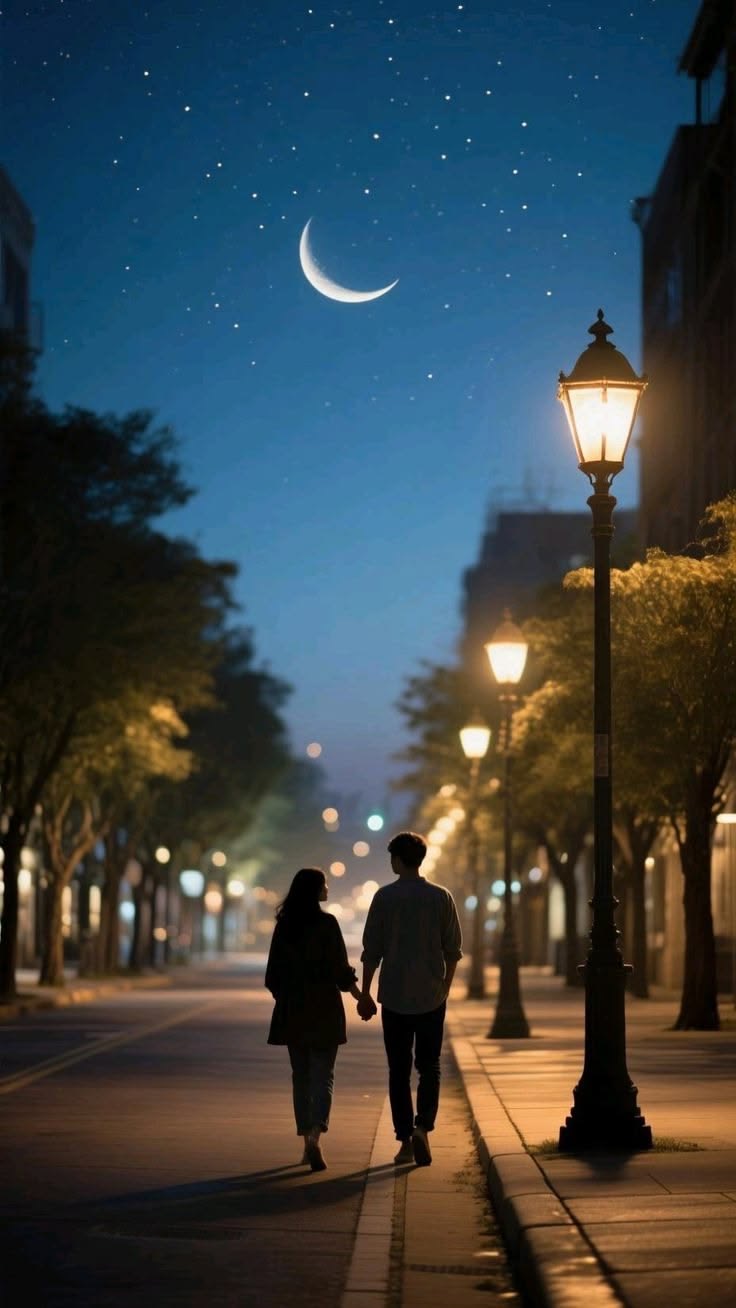
They reached the bend where the trees began. The wind rose, scattering petals across their path. She turned slightly, perhaps to hide another tear. He lifted his hand as if to tuck a lock of hair behind her ear — but stopped halfway, letting it fall.
Then they disappeared around the corner, and the air trembled with everything left unsaid.
Another line pushed through the quiet: This love had learned to bless.
The temple bells rang one last time — slower now, their echo rolling through the valley like a sigh without a place to rest. A few petals drifted to my feet, still moving in the breeze, and I understood that even silence remembers love.
I stood long after the sound softened and the light shifted on the marble. When at last I looked up at the sky, I whispered the same words they had written:
“God, please ensure the happiness for this person in this life… and in the next, let them find each other again.”
Maybe love never really leaves— it just changes its form — from touch, to memory, to prayer. And sometimes, that prayer is enough to keep two souls connected — even when the world calls it goodbye. And somewhere beyond this morning, two souls smiled — because even heaven had remembered their prayer.
Some loves never end — they just learn to live quietly inside the prayers they leave behind. Maybe that’s what love truly is — not the staying, not even the goodbye… but the blessing that remains after both are gone. And if there’s mercy in the sky, perhaps somewhere beyond this life, two souls still walk together — shoulder to shoulder — under the same light that once turned their tears into stars.
And when they do, when the universe lets them meet again, they will not need words or promises — only the quiet knowing that they had already loved each other once, and that was enough to last until the next life.
Did this story stay with you?
You might also feel…

If this story stayed with you…
New stories, delivered quietly to your inbox.