
I’ll Meet You Again
Some goodbyes do not happen in a moment.
They begin quietly — somewhere between a slowed-down drive,
a hand held a little longer than usual,
and a silence that both people understand but refuse to name.
This was not the end of a story.
This was the moment it changed its form —
from something that could be seen… to something that would have to be felt.
The Goodbye That Neither of Them Could Say
There are moments the universe quietly steps back from. Moments so private, so completely between two souls, that even the air seems to understand — pulling away, giving them room, allowing the silence to become the only witness.
This was one of those moments.
He had taken the long ride to drop her. The city had moved around them the entire way — signals changing, headlights blurring past, the world settling into its evening with complete indifference to what was happening inside that car. He had driven slowly without discussing it. She had said nothing about the pace. Some things are understood without being spoken, and the need to make time last was one of them.
When the car stopped near her place, he did not switch off the engine.
His foot stayed against the accelerator — not pressing hard, not releasing. Suspended. As if the mechanical hum beneath them was the only thing still holding the moment in place. As if the moment he lifted his foot completely, the universe would register their stillness and finally do what it had been threatening to do all evening.
He wasn’t driving anymore. But he was not ready to stop.
Because to stop was to arrive. And to arrive was to begin the goodbye. And the goodbye was the one thing neither of them knew how to do.
Her hand was in his — had moved there quietly, somewhere after the first hour, the way her hand always found his: not with announcement, not with ceremony, just with the simple certainty of something that knows where it belongs. Her fingers were through his with a pressure that was not frantic, not clutching — but absolute. The kind of hold that is not about strength. It is about truth. It says: I know what the world requires of us tonight. And my hand is the last argument I have against it.
He felt the same thing in his own grip. Every time the hold softened even slightly — a natural exhale, a moment of forgetting — both of them tightened without thinking. Neither one choosing it. The body simply refusing. The body having its own understanding of what this night was asking.
They were not holding hands. They were holding the last living edge of everything they had built together.
No words passed between them. And yet the silence was not empty — it was the loudest thing in the world. It carried every conversation they had ever had. Every night that had stretched beyond midnight without either of them noticing. Every moment one of them had glanced at the other and felt something settle inside — something that had always been restless, finally recognizing where it was supposed to be.
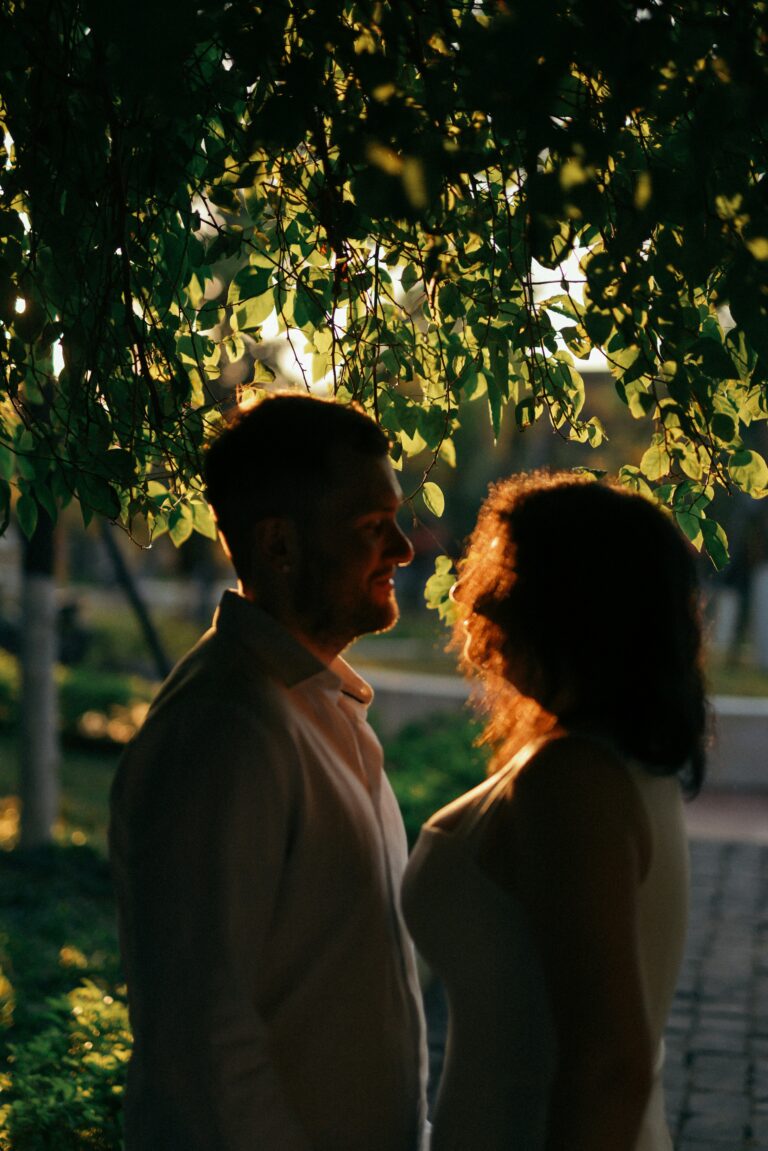
Their eyes met. And in that single, unguarded look — held in a parked car on a quiet street while the city went about its evening with perfect unawareness — a thousand moments lived again at once. The drives that took the longer route without being discussed. The way he remembered what she was reading before she mentioned it. The small habits of two people who had learned each other so completely that caring had stopped being a choice and become simply the way they existed.
Everything outside the glass dissolved. There was only this. The warmth of his palm against hers. The rhythm of two heartbeats that had learned to find each other without trying. And the unbearable, sacred weight of a goodbye that had been approaching for weeks — and that neither of them was willing to be the one to say out loud.
The phones began to ring. Without looking, without speaking, both of them reached and silenced the calls. A single, quiet act of refusal. The world could wait. Nothing outside this car had the right to exist yet.
Time, which had been generous, eventually stopped being generous.
He could feel the moment arriving the way you feel the last notes of a song before it ends — not sudden, not harsh, but inevitable. He looked at her. Really looked at her. The way you look at something you are trying to memorize before the light changes. He took in every detail the way a person saves something they are afraid of losing — carefully, completely, as if the quality of the attention might make the memory last longer.
She was holding herself together by something very thin. He could see it in the careful steadiness of her breath. In the way her eyes had gone very still — the stillness of a person who has already decided they will not fall apart, and is holding that decision with everything they have left.
She was not going to be able to say anything. He knew that. He knew her the way you know something you have loved quietly for a long time — not by thinking, but by understanding that lives in the chest, below words.
So he steadied his own heartbeat — held it still — and spoke. Not a speech. Not an explanation. Two lines. The only two that were true enough to carry what he could not leave unsaid.
Tu hamesha meri rahegi. Aur mere saath rahegi.
You will always be mine. And you will always be with me.
Not beside me — perhaps life is not allowing us that tonight. But in me. Permanently. That corner of my heart that learned your name — I will never give it to anyone else. I would not know how. In every morning prayer, whatever I ask for myself, I will ask for you first. Before my own peace. Before my own happiness. Your name comes before mine in every wish I will ever make. And that will not change because distance changes. That will not change because anything changes.
Main tujhse fir milunga. Aur hamesha milta rahunga.
I will keep meeting you. In every form the universe allows me.
In the breeze that finds you when you need to breathe and don’t know why the air suddenly feels kind. In the line of a story that makes you pause — that makes you feel, without knowing how, that someone wrote it only for you. In the warmth that arrives in a cold room with no explanation. In the smile that finds your face before you give it permission. You will not always see me coming. But whenever life presses too hard — whenever you need to feel that someone is standing quietly behind you — I will already be there. You will not need to say it. I will already know.
She heard every word. She received them the way the earth receives the first rain after a long summer — completely, without losing a single drop, drawing each word down into a place where it would live long after the evening was over.
For a long moment, she did not move. She stayed with his words the way you stay with a prayer after the last syllable — not because you haven’t finished, but because you are not ready to leave the space it opened inside you.
Then, slowly — with a quiet dignity that cost her everything — she opened the car door.
Every step she took away from that car was the heaviest step of her life. Not heavy with regret. Heavy with what she was carrying — every memory, every conversation, every version of themselves that had existed between two people who had chosen each other without ceremony, simply because the heart does not wait for ceremony. All of it compressed now into something she would carry forward alone, for all the days that came after this one.
He watched. He did not look away. He stayed with the engine running and his hands still warm from hers — holding the moment for as long as it could be held.
At the other side of the road, she turned. She turned because she knew he would still be there. Not hoping. Knowing. Because he was always still there.
He was.
He remained until she was gone from sight. And only then did he finally move the car away from that curb — carrying with him the particular, permanent weight of a missing that had no end date. Not the kind that heals. The kind that becomes part of how you breathe.
The Balcony Where He Kept Her Place
After that night, whenever the missing became too large for the inside of his chest, he went to his balcony.
It was on the top floor — high enough that the city below felt like a different world, where ordinary things happened to ordinary people without consequence. Up here, the sky felt close. The moon felt like it was facing him directly. And some nights, that was the only conversation that helped.
He always made two cups.
One cup of coffee for himself — strong, slightly bitter, the kind that keeps you present when the heart wants to drift somewhere softer. And one cup of hot chocolate for the chair across from him. Her favourite. The exact kind. The exact temperature she preferred, which he knew without having to think about it, which was itself a small devastation. He placed it there every time with the same deliberateness — gently, at the right distance, steam still rising — as if she might arrive at any moment and find it waiting exactly as she liked it.
She never arrived. But the cup was always there.
Because placing it there was not wishful thinking. It was a ritual of love. It was his way of saying something the night could hear even when she could not: your chair is not empty. You are simply not visible tonight. And there is a difference between the two that I will never stop believing in.
He would open the diary — the one where her name appeared in every other line, where each sentence was not written but pressed, the way you press something precious between pages to preserve it — and he would talk to the moon about her. Not asking for her return. Not bargaining. Simply speaking her name into the night the way prayers are spoken: not because you expect an answer, but because the speaking itself is a form of closeness. Because saying her name out loud, even to the moon, even to the dark, meant she was still real. Still the truest thing in his life.
The hot chocolate would cool. The candle on the old wooden table would burn lower. The blue roses on the wall of the balcony — the ones that looked almost mythical in the dark — would hold their fragrance quietly in the night air.
And somewhere in that stillness, between the flowers and the city lights below and the moon above — he would feel, impossibly, a little less far from her.
The Evening That Arrived Without Permission
Then came an evening that had not asked to be different from all the others.
He left work a little early. Earphones in, an old Hindi melody sitting softly in his chest — one of those songs that carries a specific person in its sound, so that listening and remembering become the same act, inseparable, one. He walked without deciding where he was going. Let his feet carry him the way the heart sometimes carries you — not with direction, but with the quiet pull of memory that knows where it needs to go even when the mind has not caught up.
He found himself standing outside the café. Their café.
The one with the dim lamp in the corner they had always chosen. The bookshelf pressed along the wall — because she always reached for a book while they shared drinks, running her finger along the spines slowly, looking for the one that fit. He had never once told her how much he loved watching her do that. Some things you carry quietly, saving them for later — not knowing that later sometimes arrives in a shape you did not expect.
He went inside. At the counter, when the girl asked for the name to write on the cup, he gave hers.
He did not pause. He did not decide. Her name simply arrived — the way it always arrived when someone asked for it, the way breathing arrives, the way the heart beats without instruction. Write her name. It is her drink. It has always been her drink.
The girl at the counter looked at him for just a moment — soft, without question — and wrote the name without a word.
He carried the hot chocolate to their corner. Placed it across from him, facing the empty chair. He simply sat in the particular quiet of a place that still held their history — in the warmth of the lamp, in the grain of the wooden table, in the narrow gap on the shelf where a book was still tilted at a slight angle, as if she had set it down just a moment ago and would be back to finish it.
He sat, and he waited, and he did not know he was waiting.
The door opened.
The Name on the Glass
She had not planned to come here either.
She had simply needed — the way the heart sometimes needs something before it can name what that something is — to be somewhere that still felt like him. Where the light was the right shade. Where the air carried the right temperature of memory. Where she would not have to explain anything because the walls already understood.
So she had come to the café. Their café. Without telling anyone. Without fully
admitting to herself what she was looking for — only following the quiet pull that the heart issues when it has been patient long enough and simply needs to be somewhere true.
At the counter, when the girl asked for the name — she gave his.
Quietly. Naturally. Without a beat of hesitation. Because his name had been the first word on the tip of her heart for so long that giving it felt less like a choice and more like releasing something she had been holding in.
Write his name. Because that is what you write when something belongs to someone.
The girl at the counter went still. She looked at the name on the new cup. Then at the name on the cup she had written twenty minutes ago. Then at the man in the corner. Then at the woman at the counter. The same two names. The same café. The same evening.
The universe, it seemed, had been planning this longer than either of them knew.
She called the name across the café — softly, carefully, as if she understood she was saying something sacred.
She turned.
And the world — which had been moving at its ordinary pace, chairs scraping, music low — went quiet in the way that only the interior of a person goes quiet when the thing they have been carrying for months is suddenly, inexplicably, standing across the room from them.
There was their corner. The lamp. The bookshelf. The wooden table. The cup with her name, placed across from him, still holding its heat. And him — turning toward his name being called, and finding her.
Their eyes met.
And everything — every prayer spoken to the moon, every cup placed in an empty chair, every morning he had woken already carrying her name before he carried anything else — arrived at once. Not loudly. The way the most true things always arrive: quietly, completely, without announcement.
Neither of them moved immediately. They stood and sat in that stillness — she at the counter with his name in her hand, he at the table with hers — for the space of one full breath that neither of them took.
He had made two promises on the night of the great goodbye.
He had kept them in every form the universe allowed —
the breeze, the story line, the warmth in a cold room.
He had not known, then, that the universe
had been quietly preparing this one too.
She walked to the table. She sat where she had always sat. He slid her hot chocolate toward her — still warm, still carrying her name — and she placed his cup in front of him, his name facing him like an answer he had stopped expecting.
They looked at each other across that small wooden table. And the silence between them — the fullest, most complete silence either of them had ever known — held everything that had not been said since the night of the curb. All of it living here now, not as ache, but as something that had finally been allowed to rest.
As if time had not passed. As if time had never been the point.
The universe does not always speak in grand gestures.
Sometimes it speaks in a name written on a cup. Sometimes it brings two people through the same door on the same evening — drawn by the same quiet ache, guided by nothing more than the heart following what it cannot forget — and seats them across from each other in the only corner that ever felt like home.
Some love does not end. It only learns how to wait.
He had been talking to the moon about her for months. Placing her cup in an empty chair. Pressing her name into the pages of a diary as if the ink itself could keep her close. He had not known the moon had been listening. Had not known the universe had been holding every prayer, every whispered name, every cup of hot chocolate placed in an empty chair — holding all of it carefully, the way you hold something that matters, until the right evening arrived to give it back.
This was that evening.
She came back.
He was already there.
And the story — which had never truly ended, only changed its form from something that could be seen to something that had to be felt — finally, quietly, came home.
Returned
Epilogue
A letter not written to be sent.
Written to be kept — the way you keep something
that belongs to no envelope, no address,
only to the space between two heartbeats
that have always found each other.
To you —
There were nights I sat on that balcony and talked to the moon because I didn’t know what else to do with everything I felt. Not because I believed the moon was listening. But because speaking your name into the dark was the closest I could get to you. And some nights, that was enough. Some nights, it was all I had.
I placed your cup there every time. Your favourite drink. The exact kind. I want you to know that — not because it is romantic, but because it is true. It was never a gesture. It was a refusal. A quiet, stubborn refusal to let the chair across from me mean nothing. You were simply not visible. And I chose, every single night, to believe in the difference.
What I did not tell you on the night the engine was still running and your hand was still in mine — what I did not know how to say — is this:
I was not afraid of losing you. I was afraid of what I would become in the silence you left behind. I was afraid I would forget, slowly, what it felt like to be truly known. The way you knew me. Without needing to ask. Without needing proof.
I did not forget.
And then you walked through that door. When our eyes met across that room — it was not surprise. It was not even joy, not exactly. It was the feeling of a breath finally taken after a very long time of not quite breathing. The soul saying — yes. There. That is where I belong.
In that small, ordinary moment — your name on my cup, mine on yours — the universe said everything it had been holding for months. It said: this was always going to find its way back.
I would do all of it again. Every night on that balcony. Every cup placed in an empty chair. Every conversation with the moon. I would do all of it again — not because the waiting was easy, but because you were worth every single form the missing took.
You always were.
With everything that remained, and everything that came back —
Yours.
Some love does not end.
It only changes its address —
from the hand it used to hold
to the chest that never stopped.
And when the universe finally allows it to return,
it does not arrive loudly.
It arrives the way it always did —
quietly, completely,
like something that was always
already home
Did this story stay with you?
You might also feel…

If this story stayed with you…
New stories, delivered quietly to your inbox.